Introduction
A furnace is one of the hardest-working systems in any home, especially during the colder months when reliable heating becomes essential for comfort and safety. While modern furnaces are designed to last for many years, their longevity depends heavily on regular maintenance. Unfortunately, many homeowners only think about their furnace when it stops working, often during the coldest part of winter when repair costs can be higher and emergency service appointments are difficult to secure.
Routine furnace maintenance is not simply about preventing breakdowns. It also helps improve energy efficiency, lowers heating costs, extends equipment life, and reduces the risk of safety issues such as carbon monoxide leaks. By following a consistent annual maintenance routine and knowing when professional assistance is required, homeowners can keep their heating systems operating safely and efficiently for decades.
Why Annual Furnace Maintenance Matters
Every furnace experiences wear and tear as it operates throughout the heating season. Dust accumulates on internal components, moving parts gradually wear down, and small issues can develop into major problems if they go unnoticed.
Regular maintenance allows these concerns to be identified and addressed before they affect system performance. A properly maintained furnace offers several important benefits:
- Improved energy efficiency and lower heating costs
- More consistent indoor temperatures and comfort
- Reduced risk of unexpected breakdowns
- Extended lifespan of furnace components
- Better indoor air quality through improved airflow
- Early detection of worn or damaged parts
- Enhanced safety through inspection of critical systems
- Reduced likelihood of costly emergency repairs
In addition, annual inspections help ensure that safety-related components are functioning correctly, protecting both the home and its occupants. Many furnace manufacturers also recommend annual servicing to maintain warranty coverage, making routine maintenance an important investment in the long-term value of the system.
Replacing Air Filters Regularly
One of the simplest yet most important maintenance tasks is replacing the furnace air filter. The filter captures dust, dirt, pet hair, and airborne particles before they enter the heating system.
As the filter becomes clogged, airflow is restricted. This forces the furnace to work harder to distribute warm air throughout the home, increasing energy consumption and placing unnecessary strain on internal components.
Most filters should be inspected monthly during periods of heavy use and replaced according to the manufacturer’s recommendations. Clean filters improve airflow, support indoor air quality, and help the furnace operate more efficiently.
Inspecting the Heat Exchanger
The heat exchanger is a critical component that transfers heat from the combustion process into the home’s air supply. Over time, age and repeated heating cycles can cause cracks or damage to develop.
A cracked heat exchanger can allow dangerous gases, including carbon monoxide, to enter living spaces. Because these defects are often difficult to detect without specialised tools and training, heat exchanger inspections should always be performed by a qualified HVAC technician.
Professional inspections help identify potential safety concerns before they become serious hazards.
Cleaning Burners and Checking Flame Quality
Burners play a vital role in generating heat within the furnace. Dust, dirt, and debris can accumulate on burner assemblies over time, affecting combustion efficiency.
A properly functioning gas furnace should produce a steady blue flame. Yellow, flickering, or irregular flames may indicate combustion problems that require professional attention.
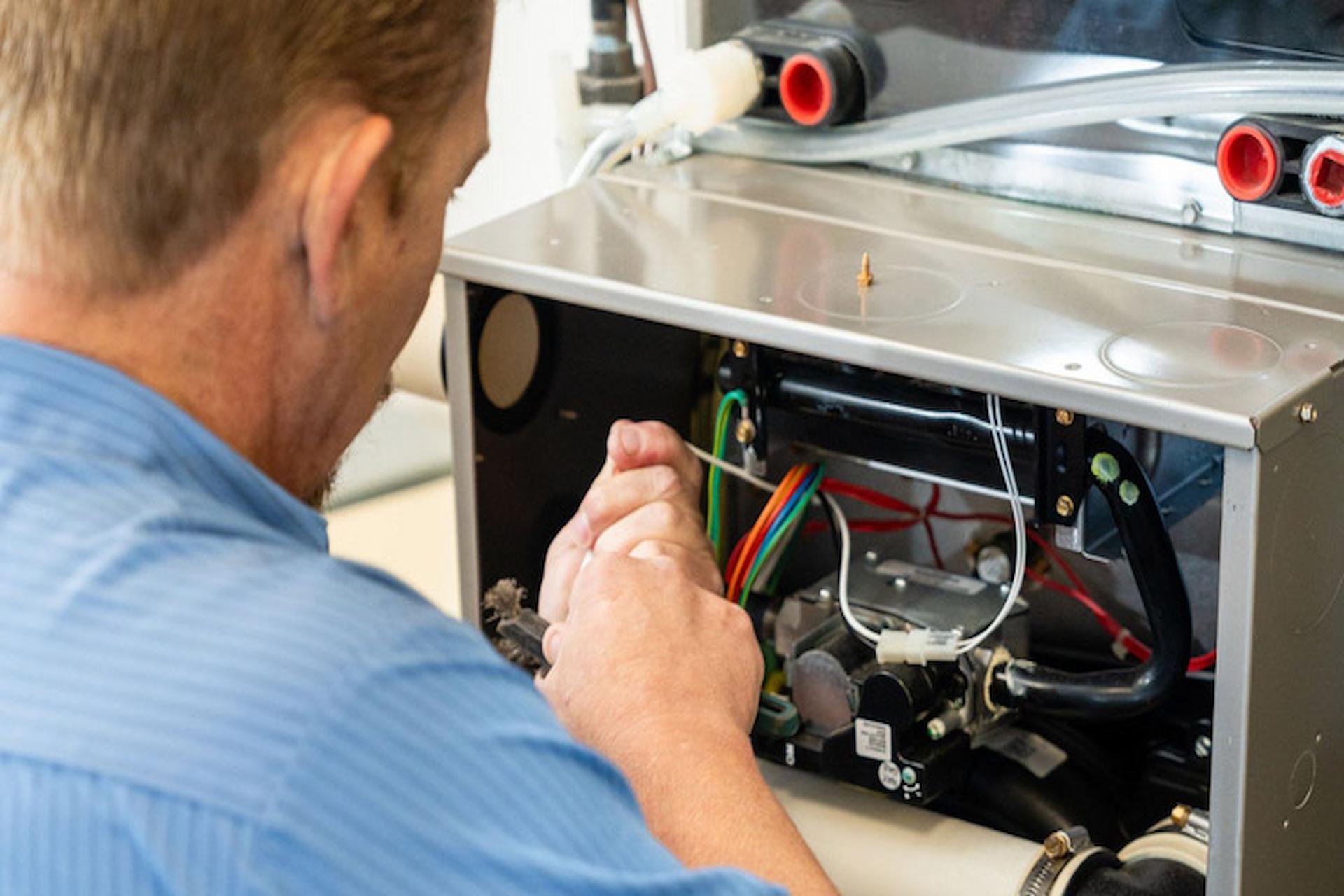
During annual servicing, technicians clean the burners, inspect ignition components, and verify that combustion is occurring safely and efficiently.
Examining the Blower System
The blower motor and fan assembly are responsible for moving heated air throughout the home’s ductwork. As these components operate continuously during winter, they experience considerable wear.
Maintenance typically involves inspecting belts, lubricating moving parts when applicable, checking motor performance, and removing dust from the blower assembly. A clean and properly functioning blower improves airflow, enhances comfort, and reduces strain on the furnace. Neglecting blower maintenance can lead to reduced efficiency and increased energy costs.
Checking the Flue and Ventilation System
A furnace produces combustion gases that must be safely vented outdoors. The flue pipe and ventilation system play a critical role in this process. Over time, corrosion, physical damage, blockages, or loose connections can interfere with proper venting. Any restriction in the exhaust system may affect furnace performance and potentially create safety risks. During an inspection, technicians typically look for:
- Signs of corrosion or rust on flue pipes
- Loose or disconnected venting components
- Blockages caused by debris, nests, or other obstructions
- Cracks, holes, or physical damage in the vent system
- Proper draft and airflow through the exhaust pathway
- Evidence of moisture accumulation or condensation issues
- Secure connections between furnace and venting components
- Potential carbon monoxide safety concerns
Annual inspections ensure that venting systems remain structurally sound and capable of safely removing combustion by-products from the home. Proper ventilation not only supports furnace efficiency but also helps protect household occupants from potentially dangerous exhaust gases.
Testing the Igniter, Gas Valve, and Thermostat
Several smaller components contribute significantly to furnace reliability. The igniter must function correctly to initiate the heating cycle, while the gas valve regulates fuel delivery to the burners.
Technicians typically test these components during routine maintenance to ensure they operate as intended. Thermostat calibration is also important because inaccurate temperature readings can cause heating inefficiencies and inconsistent indoor comfort.
A properly calibrated thermostat helps maintain desired temperatures while avoiding unnecessary energy consumption.
What Homeowners Can Do Themselves
Homeowners can safely perform several basic maintenance tasks. Replacing filters, keeping vents unobstructed, cleaning around the furnace, checking thermostat settings, and visually inspecting accessible components can all support system performance.
However, maintenance involving combustion systems, gas pressure measurements, electrical testing, heat exchanger inspections, or carbon monoxide detection should always be left to licensed professionals. These tasks require specialised equipment and expertise to ensure accurate results and safe operation.
When to Schedule Professional Maintenance
The best time to schedule furnace maintenance is during late summer or early autumn, before the heating season begins. This timing allows technicians to identify and address potential issues before the furnace experiences heavy demand.
Many homeowners choose maintenance agreements that include annual inspections and priority service. These plans can provide peace of mind and help ensure that routine servicing is not overlooked.
Regardless of whether a maintenance agreement is used, annual professional inspections remain one of the most effective ways to protect a furnace investment.
Warning Signs That Require Immediate Attention
Certain symptoms should never be ignored. Unusual noises, persistent burning smells, difficulty starting, frequent cycling, uneven heating, rising energy bills, or visible soot around the furnace may indicate underlying problems.
Homeowners should also take any carbon monoxide alarm activation seriously and seek immediate professional assistance. Delaying repairs can increase safety risks and potentially lead to more expensive damage.
FAQs
How often should a furnace be professionally serviced?
Most HVAC professionals recommend scheduling furnace maintenance once every year. Annual inspections help identify developing issues, improve efficiency, and ensure all safety systems are functioning correctly before the heating season begins.
How long does a well-maintained furnace typically last?
A properly maintained furnace can often last between 20 and 30 years. Regular servicing, timely repairs, and consistent filter replacement play a significant role in extending the lifespan of the heating system.
Can a dirty air filter damage a furnace?
Yes. A clogged filter restricts airflow, forcing the furnace to work harder. This additional strain can increase energy consumption, reduce efficiency, and potentially cause overheating or premature component failure.
What are the signs of a cracked heat exchanger?
Signs may include unusual odours, soot accumulation, inconsistent burner flames, or carbon monoxide concerns. However, many cracks are difficult to detect without professional inspection equipment.
When should I replace my furnace filter?
Most filters should be checked monthly and replaced according to manufacturer recommendations. Homes with pets, allergies, or higher dust levels may require more frequent filter changes.
Is furnace maintenance worth the cost?
Yes. Preventative maintenance often costs far less than emergency repairs. Regular servicing improves efficiency, reduces breakdown risks, enhances safety, and helps extend the life of the furnace.
What should I do if my furnace starts making unusual noises?
Unusual sounds such as banging, rattling, squealing, or grinding should be investigated promptly. These noises often indicate mechanical problems that can worsen if left unaddressed.
Final Thoughts
A furnace can provide reliable heating for 20 to 30 years or more when maintained properly. Regular filter changes, annual professional inspections, burner cleaning, blower maintenance, and ventilation checks all contribute to improved efficiency, lower operating costs, and enhanced safety. While homeowners can perform several basic maintenance tasks themselves, critical inspections involving combustion systems and carbon monoxide safety should always be handled by qualified HVAC professionals. By following a consistent annual maintenance routine, homeowners can enjoy dependable comfort, maximise equipment lifespan, and reduce the likelihood of unexpected breakdowns during the coldest months of the year.