Sim racing has evolved rapidly over the past decade. What once relied on basic steering wheels and flat screens has transformed into a highly immersive experience that closely mirrors real-world driving. Among the most significant developments is virtual reality (VR), which has redefined how players interact with racing simulations. For enthusiasts considering an upgrade, the question remains: does VR genuinely enhance the experience, and is it worth the investment?
A New Level of Immersion
Traditional sim racing setups typically involve a monitor or triple-screen display. While these can provide impressive visuals, they still create a separation between the player and the virtual environment. VR eliminates that barrier.
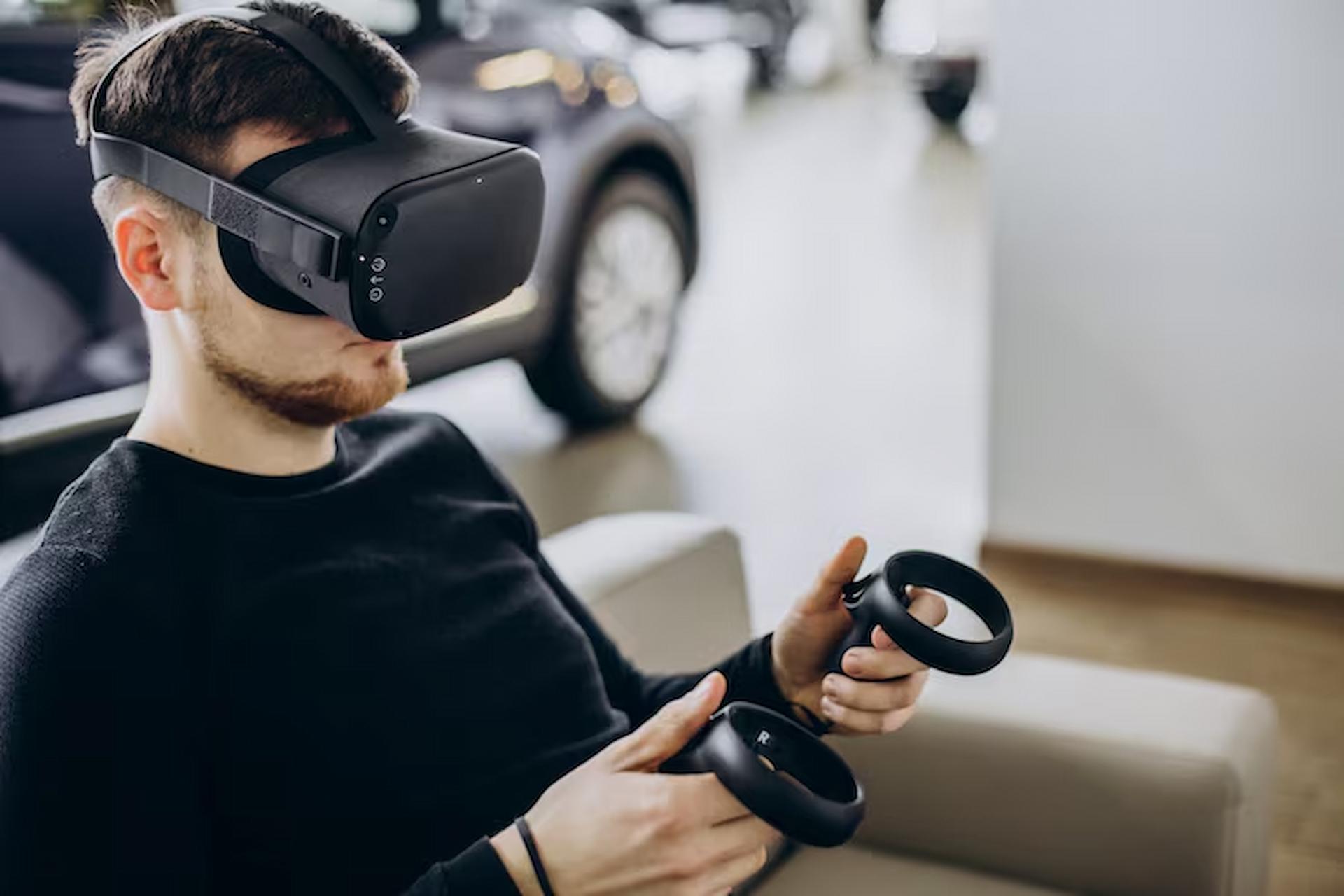
With a VR headset, the driver is placed directly inside the cockpit. You can look into corners, check mirrors naturally, and judge distances with far greater accuracy. This spatial awareness is one of the most immediate benefits. It feels less like playing a game and more like sitting in a real car.
The sense of depth is particularly impactful. Corners, elevation changes, and braking points become easier to judge because your brain processes the environment in three dimensions rather than interpreting a flat image.
Enhanced Driving Precision
VR does more than improve visuals; it directly influences performance. Many sim racers report better consistency and lap times after switching to VR. This is largely due to improved depth perception and more intuitive head movement.
In traditional setups, drivers rely on fixed camera angles and button inputs to look around. In VR, you simply turn your head. This makes tasks like spotting apexes, tracking opponents, and positioning the car feel more natural.
For those using advanced hardware such as the Moza R3, the combination of force feedback and VR can be particularly compelling. The tactile response from the wheel, paired with a fully immersive visual environment, creates a cohesive driving experience that closely mimics real-world sensations.
Realism Beyond Graphics
While graphics quality matters, realism in sim racing is about more than visual fidelity. VR enhances the overall sense of presence. You are not just seeing the track; you feel like you are part of it.
Small details become more noticeable. The positioning of the steering wheel, the dashboard layout, and even the perceived speed feel more authentic. High-speed sections can feel genuinely intense, as your field of view and motion perception align more closely with reality.
Weather conditions and lighting also take on a new dimension. Driving through rain or at dusk in VR can feel significantly more atmospheric compared to a standard display.
The Learning Curve
Despite its advantages, VR is not without challenges. For newcomers, there is often an adjustment period. Motion sickness can occur, especially during longer sessions or in fast-paced races. However, this typically improves with time as the body adapts.
Another factor is setup complexity. VR requires additional hardware, including a compatible headset and a powerful PC to maintain smooth performance. Frame rates must remain stable to avoid discomfort, which can mean upgrading your system.
There is also a learning curve in terms of comfort and usability. Adjusting headset fit, configuring settings, and finding the right balance between graphics and performance can take time.
Cost Considerations
One of the most common concerns is cost. VR headsets, along with the necessary hardware upgrades, can represent a significant investment. When combined with existing sim racing equipment, the total cost can quickly add up.
However, value depends on how much you engage with sim racing. For casual players, the investment may feel excessive. For dedicated enthusiasts, the improved immersion and performance benefits can justify the expense.
It is also worth noting that VR technology has become more accessible in recent years. Entry-level headsets now offer solid performance at more affordable prices, making it easier to explore VR without committing to high-end equipment immediately.
Comfort and Practical Limitations
Extended VR sessions can sometimes be physically demanding. Wearing a headset for long periods may cause discomfort, particularly if the device is not well-fitted. Heat buildup and limited ventilation can also affect longer races.
Additionally, VR can make it harder to interact with external controls. Adjusting settings, using a keyboard, or even reaching for a drink requires removing or lifting the headset. This can interrupt the flow of a session.
For competitive racers or those participating in endurance events, these practical considerations become more significant. Some drivers choose to alternate between VR and traditional setups depending on the situation.
VR vs Traditional Setups
Comparing VR to traditional setups is not straightforward, as each has its strengths.
Triple-screen setups offer excellent clarity, wider field of view, and easier access to external controls. They are often preferred in professional or competitive environments where consistency and comfort are critical.
VR, on the other hand, prioritises immersion and realism. It provides a unique sense of presence that screens cannot fully replicate. The trade-off is reduced convenience and, in some cases, lower graphical sharpness.
Ultimately, the choice depends on personal preference. Some drivers prioritise competitive performance, while others value the experience itself.
Is It Worth the Investment?
Whether VR is worth the investment depends on your goals as a sim racer.
If you are seeking a deeper, more immersive experience, VR offers a clear advantage. It transforms sim racing into something far more engaging and lifelike. The ability to naturally interact with the environment adds a layer of authenticity that traditional setups struggle to match.
However, if your focus is purely on competitive racing or convenience, a high-quality monitor or triple-screen setup may be more practical. VR requires more effort to set up and maintain, and it may not suit everyone.
For many enthusiasts, the ideal approach is to try VR before committing. Testing a headset, even briefly, can provide valuable insight into whether the experience aligns with your expectations.
Final Thoughts
VR has undeniably changed the sim racing landscape. It has shifted the focus from simply playing a racing game to experiencing one. The sense of immersion, improved spatial awareness, and enhanced realism make it a compelling option for serious enthusiasts.
That said, it is not a universal solution. Cost, comfort, and practicality all play a role in determining whether VR is the right choice.
For those willing to invest the time and resources, VR can elevate sim racing to an entirely new level. For others, traditional setups remain a reliable and effective option. The key is understanding what matters most to your experience and choosing accordingly.