Power outages can happen unexpectedly, especially during storms or periods of heavy electricity demand. Once power is restored, most homeowners expect their air conditioner to turn back on without any issues. Unfortunately, that’s not always the case. If your AC doesn’t restart, it doesn’t necessarily mean the system has suffered major damage, but it does mean something needs attention.
In many cases, the problem is something simple, such as a tripped breaker or a thermostat setting that changed during the outage. However, if basic troubleshooting doesn’t solve the issue, it’s best to schedule professional HVAC service Dyker Heights to ensure the system is operating safely and efficiently. Before making that call, there are a few safe checks you can perform yourself.
Why an Air Conditioner May Not Restart
A sudden loss of electricity can interrupt your air conditioning system in several ways. Modern HVAC systems contain electrical components that protect the equipment from voltage fluctuations and power surges. In some cases, these safety features prevent the unit from restarting immediately after power is restored.
The issue could also be as simple as a breaker that tripped during the outage or a thermostat that needs to be reset. Understanding these possibilities can help you determine whether the problem is something you can safely check or whether it’s time to contact an HVAC professional.
Start With the Thermostat
Before inspecting the air conditioner itself, check your thermostat. During a power outage, some thermostats may reset to their default settings or temporarily lose their programmed schedule.
Confirm the Settings
Make sure the thermostat is:
- Set to Cool mode
- Programmed to a temperature lower than the current room temperature
- Displaying normally without error messages
- Powered if it uses batteries
If the display is blank, replacing the batteries or checking the home’s electrical supply may solve the problem.
Check the Circuit Breaker
Power outages and electrical surges can sometimes trip the breaker that supplies electricity to your air conditioning system.
Locate your home’s electrical panel and look for any breaker that has moved to the middle position or appears switched off.
Reset the Breaker Safely
If a breaker has tripped:
- Turn it completely to the Off position.
- Move it firmly back to On.
- Wait a few minutes to see if the air conditioner starts normally.
If the breaker trips again immediately, avoid resetting it repeatedly. This may indicate an electrical problem that requires professional diagnosis.
Give the System Time to Reset
Many newer air conditioners include a built-in delay that prevents the compressor from restarting immediately after power is restored.
This delay protects the compressor from damage caused by rapid cycling. Depending on the system, it may take several minutes before the outdoor unit starts operating again.
Be Patient Before Assuming There’s a Problem
After restoring power or resetting the breaker, wait about 10 to 15 minutes before deciding that the system isn’t working. During this time, avoid changing the thermostat settings repeatedly, as this can interrupt the startup sequence.
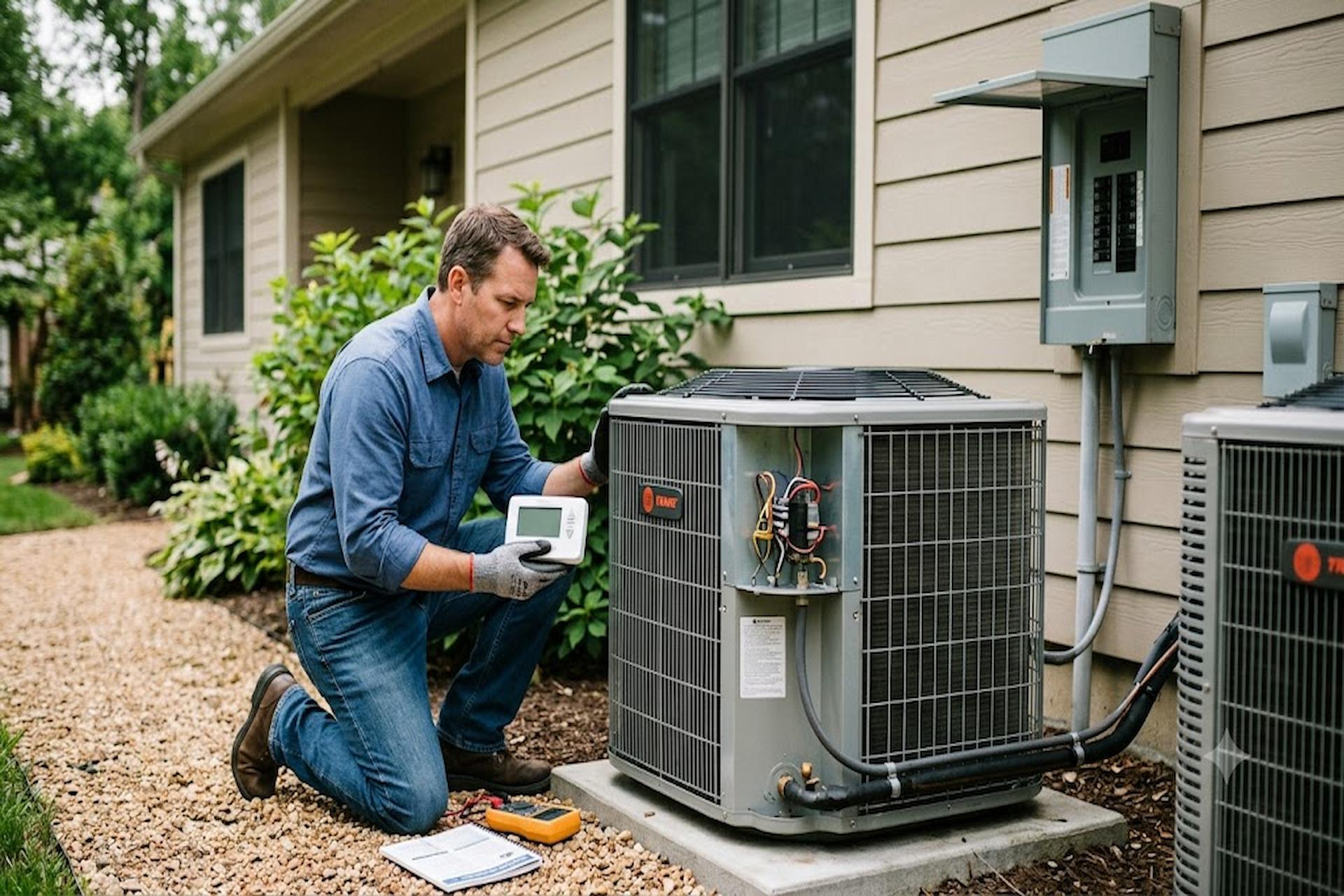
Check the Outdoor Unit
Once enough time has passed, take a quick look at the outdoor condenser unit.
Without opening the equipment or touching electrical components, check for obvious signs that the unit is receiving power.
Look for Visible Issues
You may notice:
- The fan isn’t spinning.
- No sound is coming from the unit.
- Debris is blocking airflow.
- Branches or storm debris are resting against the condenser.
If debris is blocking airflow, carefully remove it. However, never attempt to disassemble the unit or inspect internal electrical parts yourself.
Inspect the Air Filter
Although a dirty air filter isn’t directly caused by a power outage, it’s worth checking if your system isn’t performing properly after power returns.
A clogged filter restricts airflow, making it harder for the air conditioner to cool your home efficiently. If the filter looks dirty, replacing it is a simple maintenance step that may improve system performance.
Signs the Filter Needs Replacing
Look for these common signs:
- Visible dust and dirt buildup
- Weak airflow from vents
- Longer cooling cycles
- Increased dust inside the home
Replacing the filter regularly supports better airflow and overall system efficiency.
Avoid Restarting the AC Repeatedly
If your air conditioner doesn’t start immediately, resist the urge to keep turning it on and off.
Repeated restart attempts can place unnecessary stress on electrical components, especially if an underlying issue is preventing the system from operating normally.
Instead, perform the basic checks outlined above and allow the equipment time to reset before trying again.
When It’s Time to Call a Professional
If your air conditioner still won’t restart after checking the thermostat, breaker, and air filter, it’s time to contact an HVAC technician.
Several issues require professional diagnosis, including:
- Damaged capacitors
- Electrical wiring problems
- Failed contactors
- Compressor issues
- Power surge damage
- Faulty control boards
These components involve high-voltage electricity and should only be inspected by trained professionals.
Prevent Future Problems After Power Outages
Although you can’t prevent every power outage, there are steps you can take to reduce the risk of future HVAC problems.
Simple Ways to Protect Your System
Consider these preventive measures:
- Replace air filters regularly.
- Schedule annual HVAC maintenance.
- Keep the outdoor unit free of debris.
- Install a whole-home surge protector if recommended by a qualified electrician.
- Avoid running multiple large appliances immediately after power is restored.
Routine maintenance helps identify worn electrical components before they become more vulnerable to power interruptions.
Conclusion
It’s frustrating when your air conditioner won’t restart after a power outage, but the cause isn’t always serious. A thermostat reset, tripped breaker, built-in startup delay, or dirty air filter can all prevent the system from operating normally. Taking a few minutes to perform safe troubleshooting can often help you identify simple issues before calling for service.
If these basic checks don’t restore cooling, it’s best to have the system inspected by a qualified HVAC professional. Prompt attention can help prevent further damage, restore reliable cooling, and ensure your air conditioner continues operating safely when you need it most.